
Bulletproof Coffee Exposed: What Dave Asprey Got Right (and Very Wrong) -- Part 1
A scientific deep-dive into the butter coffee phenomenon that changed millions of morning routines

The $100 Million Butter Coffee Empire Built on Half-Truths
In 2004, a 300-pound Silicon Valley tech executive named Dave Asprey trekked to Tibet to “seek enlightenment.” Instead, he found yak butter tea.
Exhausted at 18,000 feet in sub-zero temperatures, he stumbled into a guesthouse near Mount Kailash. A local woman handed him a cup of creamy, fatty tea. The effect was immediate: his energy surged, his mental fog lifted, and he felt revitalized at an altitude where most people struggle to breathe.
“Why does this make me feel so good?” he wondered.
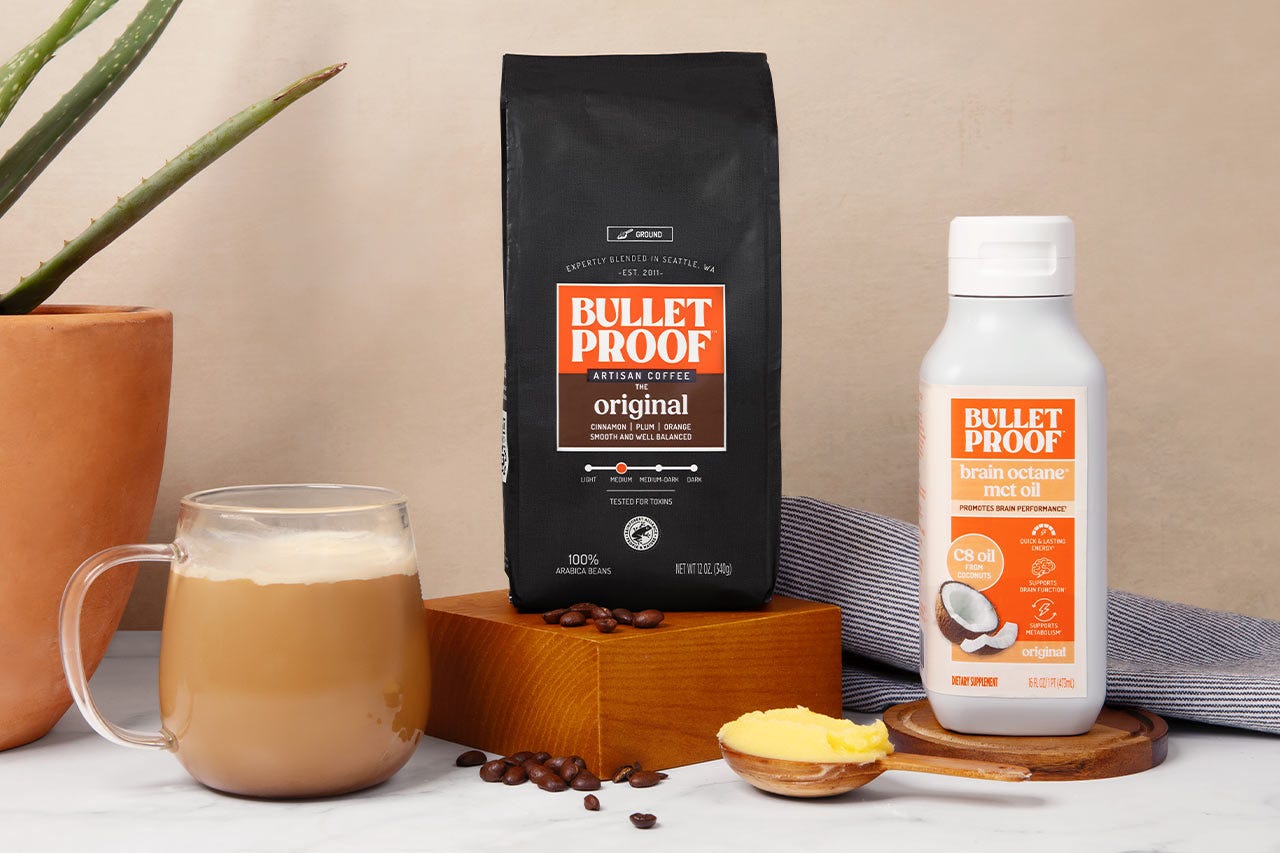
That question launched a six-year obsession that would birth Bulletproof Coffee — a 450-calorie morning beverage blending coffee, grass-fed butter, and MCT oil that Asprey claimed could:
Boost IQ by 20+ points
Eliminate brain fog for 6+ hours
Promote effortless weight loss
Replace the need for exercise and full sleep
By 2009, he published the recipe on his blog. Within years, celebrities endorsed it, coffee shops added it to menus, and Asprey built a supplement empire that’s generated over $100 million in revenue. More than 160 million cups have been consumed.
Fifteen years later, we can finally answer: What did Dave Asprey actually get right? What was pure snake oil?
The answers might surprise you.
The Original Bulletproof Coffee Recipe Deconstructed
Here’s what Asprey told millions of people to drink every morning instead of breakfast:
8-12 oz brewed coffee from “Bulletproof” branded beans (allegedly mold-free, mycotoxin-tested)
1-2 tablespoons grass-fed unsalted butter or ghee
1-2 tablespoons “Brain Octane” MCT oil (Asprey’s branded C8 MCT product)
Blend until frothy
The Numbers (2 tablespoons each):
Calories: ~450
Fat: ~50g (mostly saturated fat)
Protein: 0g
Carbohydrates: 0g
Fiber: 0g
Micronutrients: Minimal
The Protocol:
Drink this INSTEAD of breakfast
Fast until lunch (around 12-2pm)
Follow a ketogenic diet
Avoid “toxic” foods (soy, wheat, most grains, conventional dairy)
The Promises:
Clean energy and mental clarity for 6+ hours
No brain fog
Appetite suppression and weight loss
Improved cognitive performance
Ketosis without strict carb restriction
No coffee crash or jitters
Now let’s examine what science says about each component.
#1: Expensive Coffee Beans - Debunking the Mycotoxin Scare

Asprey’s Claims (The Fear-Mongering Part)
Asprey built his coffee business on a foundation of fear:
Regular coffee is “full of performance-robbing mycotoxins”
Most coffee has “dangerously high levels” of ochratoxin A from mold
These mycotoxins cause brain fog, fatigue, and poor performance
You need his specially-processed “Bulletproof” beans to avoid toxins
This became his primary marketing strategy to justify selling coffee at 2-3× the price of other specialty beans.
The mycotoxin claims are complete snake oil.
What Science Actually Shows
The mycotoxin claims are complete snake oil. Here’s what the research reveals:
FDA and Safety Data: According to FDA databases — including recall notices, warning letters, import alerts, and the CDC’s foodborne outbreaks database —ochratoxin A was never listed as the cause of a food safety issue in the United States. The FDA has not prescribed an advisory level, action level, or regulatory level for OTA in coffee because it’s simply not a significant problem.
Actual Exposure Levels: Studies show that 4 cups of coffee daily provide only 2% of the ochratoxin A exposure deemed safe by the Food and Agriculture Organization and the World Health Organization. Even at high coffee consumption, you’re nowhere near dangerous levels.
Roasting Eliminates the Problem: Research shows roasting can reduce ochratoxin A levels by 69-96%. Wet processing (used by quality coffee producers) significantly reduces mycotoxin levels before roasting even begins. By the time you’re drinking brewed coffee, mycotoxin levels are negligible.
The Expert Consensus: A 2021 toxicology-based food safety analysis found that OTA in coffee “is not acutely toxic at occurrence levels,” though at very high exposure it’s potentially harmful in animal models. But you’d never reach those levels through normal coffee consumption.
Specialty coffee roasters already use quality control practices that minimize mycotoxins. The “mold-free” premium branding is marketing, not meaningful safety difference.
What Asprey Got Right About Coffee
To be fair, Asprey wasn’t entirely wrong about coffee:
Coffee does enhance cognitive function (alertness, reaction time, attention)
Recent research shows coffee consumption reorganizes brain functional connectivity toward more efficient network properties, improving working memory and executive function
Coffee reduces inflammatory markers (IL-6 by 27%, hs-CRP by 22% with higher consumption)
Quality specialty coffee does matter for taste and compound profiles
Polyphenols and antioxidants in coffee are genuinely beneficial
The Verdict
The mycotoxin scare was pure fear-mongering designed to sell branded coffee at premium prices. Regular high-quality specialty coffee is perfectly safe. Any claims about needing “tested” or “mold-free” coffee are marketing tactics, not health necessities.
#2: Grass-Fed Butter - Marketing Hype or Meaningful Upgrade?
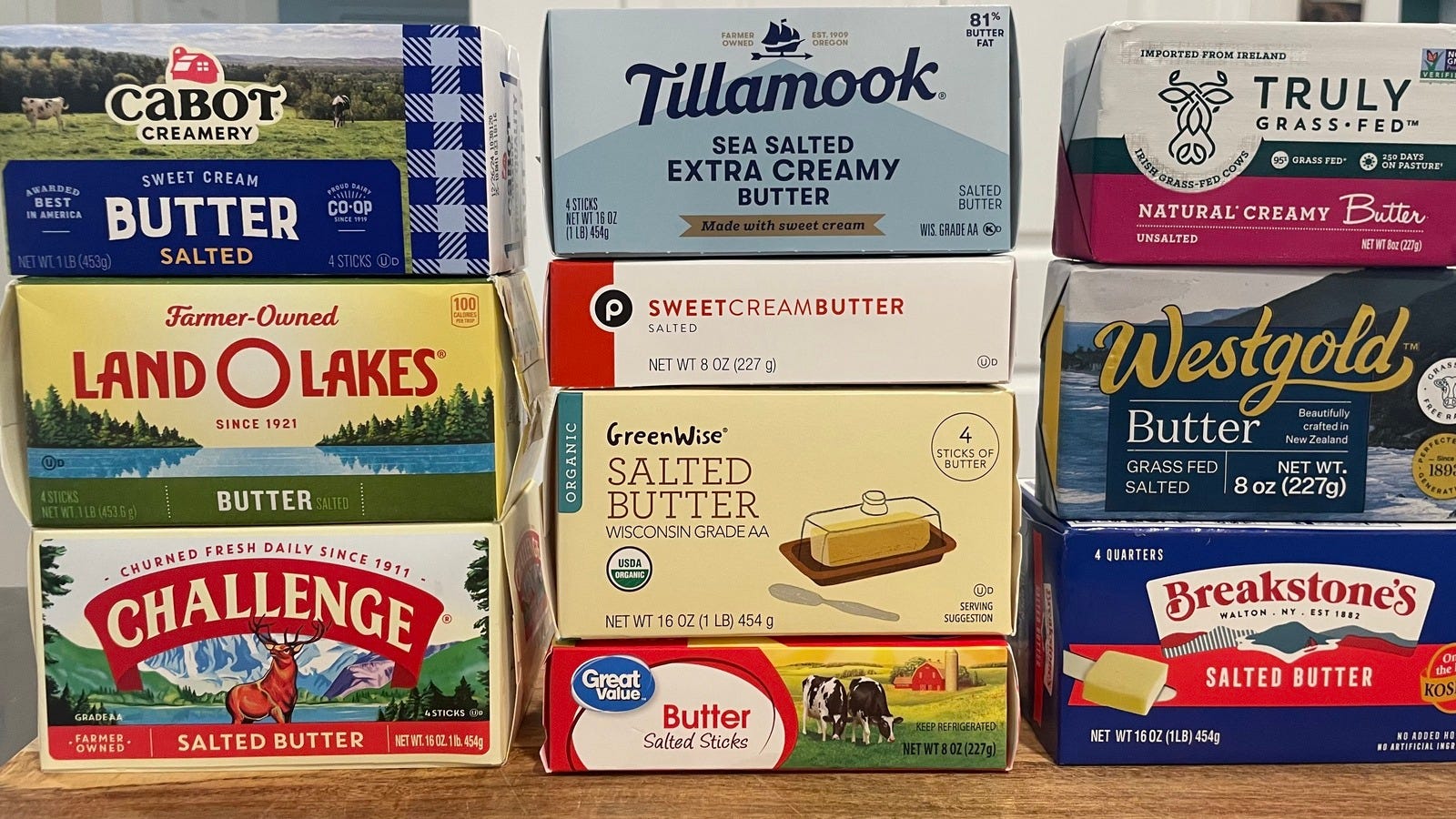
Asprey’s Claims
Grass-fed butter is nutritionally superior to conventional
Contains higher omega-3, vitamin K2, and CLA (conjugated linoleic acid)
Provides “clean energy” and sustained satiety
Essential for the “Bulletproof” effect
What the Science Shows
Grass-fed butter IS marginally better than conventional, but let’s make some meaningful comparisons (see below):
Omega-3 Fatty Acids:
Grass-fed: ~0.1-0.15g per tablespoon
Conventional: ~0.03-0.05g per tablespoon
BUT: Fish oil supplementation can provide 2-2.5g DHA+EPA (20× more)
Verdict: Better, but trivial compared to actual omega-3 sources
Vitamin K2 (MK-4):
Grass-fed: ~3-5 mcg per tablespoon
Conventional: ~1-2 mcg per tablespoon
Verdict: Legitimately better for bone and cardiovascular health
CLA (Conjugated Linoleic Acid):
Grass-fed: ~0.5-1g per tablespoon
Conventional: ~0.1-0.2g per tablespoon
Claims: Weight loss, anti-cancer
Evidence: Mixed, mostly from high-dose supplements (3-6g daily), not dietary amounts
Verdict: Possibly beneficial but unproven at these doses
Beta-Carotene:
Grass-fed has visibly more (the yellow color)
Converts to vitamin A
Verdict: Nice bonus, not transformative
MY TWO TAKEAWAYS:
1) Grass-fed better is legitimately better for MK-4 vitamin K2
(2) Instead of using grass-fed butter, just use fish oils for the Omega 3.
The Real Function of Butter in Bulletproof Coffee
Here’s what Asprey didn’t emphasize: The primary function of butter is making MCT oil digestible. (It may also taste nice for some people.)
MCT oil alone causes severe digestive distress—diarrhea, cramping, nausea—in many people. Butter’s longer-chain fats slow MCT absorption, making the combination more tolerable.
This is the same principle behind Mary Newport’s coconut oil + MCT oil combination that we covered in our previous series.
The Cardiovascular Reality
2 tablespoons of grass-fed butter = 24g saturated fat
This is approximately 2× the American Heart Association’s recommended daily saturated fat limit (11-13g).
The comparison to coconut oil: This is essentially the same issue as Mary Newport’s coconut oil protocol. Both recommend ~24g saturated fat daily from a single source. Both will raise LDL cholesterol in most people. Both require cardiovascular monitoring.
Read: Mary Newport’s Coconut Oil For Alzheimer’s
Asprey’s grass-fed butter vs. Newport’s coconut oil:
Both ~200-240 calories
Both ~24g saturated fat
Grass-fed butter: Contains omega-3, K2, CLA, butyrate
Coconut oil: Contains lauric acid (anti-inflammatory in brain), some MCFAs
Both create cardiovascular trade-offs
The Verdict
Yes, grass-fed butter is better than conventional (3-5× omega-3, more K2), but the differences are marginal, not transformative. More importantly, these marginal improvements don’t eliminate the fundamental concern:
You’re still consuming 24g of saturated fat that will raise LDL cholesterol in most people.
#3: MCT Oil (Brain Octane) - The Only Thing Asprey Didn’t Smoke Us On

This is where we need to give Asprey credit: The MCT oil component is scientifically valid.
Asprey’s Claims
C8 MCT oil rapidly converts to ketones for brain fuel
Provides 6+ hours of sustained energy
Suppresses appetite
His “Brain Octane” (pure C8) is superior to regular MCT oil
Dave Asprey’s “Brain Octane” (pure C8) is superior to regular MCT oil
What the Science Confirms
The core claim is true: C8 (caprylic acid) produces ketones 3-6× more efficiently than longer-chain fats, including the lauric acid in coconut oil.
How it works:
Blood ketone levels rise to 0.5-1.0 mmol/L within 30-60 minutes
Ketones cross the blood-brain barrier
Brain cells use them as alternative fuel
This works even without strict ketogenic diet
Asprey was correct that pure C8 is more ketogenic than C8/C10 blends. This is one area where his product formulation was actually backed by science.
Research from our MCT series shows:
C8 produces higher concentrations of beta-hydroxybutyrate (the primary ketone)
C8 has faster secretion rates
Studies in human brain cells confirm C8’s superior ketone production
What About Appetite Suppression Claims?
Ketones do reduce ghrelin (hunger hormone) in some people
High-fat beverages increase satiety through CCK release
But 450 calories is still 450 calories—you’re not “fasting”
Individual responses vary dramatically
What About Weight Loss Claims?
The mechanism isn’t magic. It’s basic thermodynamics.
Replacing 600-calorie carb breakfast with 450-calorie fat coffee = caloric deficit
Combined with ketogenic diet and fasting = further deficit
Add exercise = weight loss
It’s not the coffee itself doing the work—it’s the complete dietary pattern.
What About His “Brain Octane” Claims?
Here’s where Asprey’s marketing diverges from science: Any C8 MCT oil works the same as “Brain Octane.”
Brain Octane: $45-50 per bottle
Generic C8 MCT oil: $15-25 per bottle
Same active ingredient, same effect, triple the price difference
The Verdict
Asprey got this part right scientifically. C8 MCT oil does produce ketones rapidly and can provide mental clarity for people in ketosis or fasting states. The combination with butter does reduce digestive issues.
But you don’t need to pay premium prices for his branded version. Any pure C8 MCT oil (or C8/C10 blend) from reputable brands works identically.
*BONUS #1* —> Bulletproof Coffee as Intermittent Fasting is a Fatal Lie
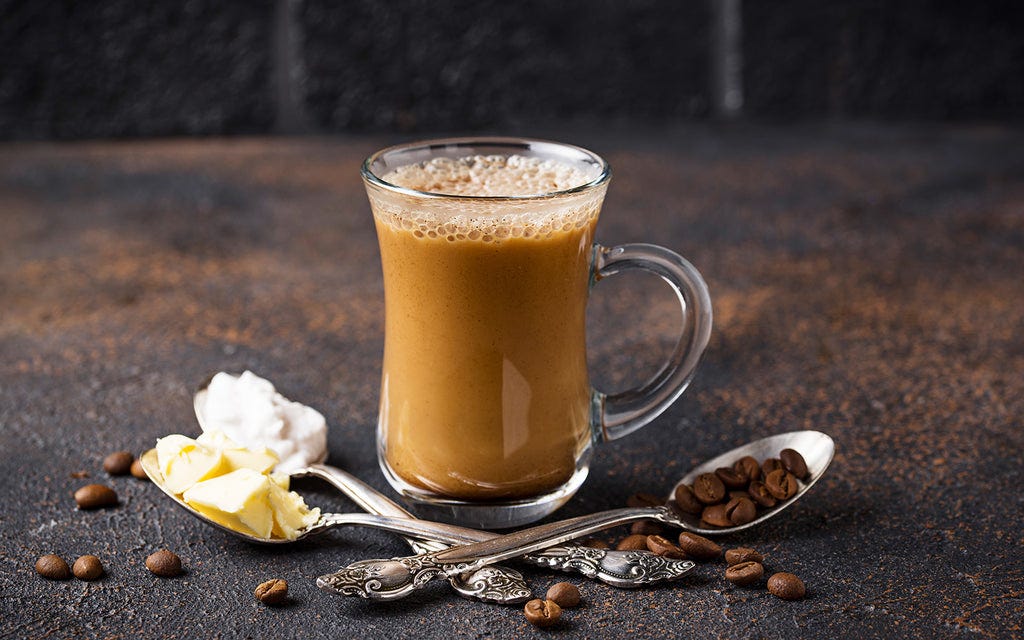
Here’s where Asprey’s protocol becomes seriously problematic, even dangerous for some people.
What He Recommended
Drink Bulletproof Coffee at 8am INSTEAD of breakfast
Fast until lunch (12-2pm)
This is supposedly “compatible with intermittent fasting”
No need to worry about missing nutrients
450 calories of butter and oil at 8am = YOU BROKE THE FAST
Why This Is Problematic
The Intermittent Fasting Lie:
Asprey marketed Bulletproof Coffee as compatible with IF, but this is fundamentally dishonest.
A true 16:8 IF protocol (eating window 12pm-8pm) means:
Fasting period: Water, black coffee, tea only (ZERO calories)
Eating window: All food consumed within 8 hours
450 calories of butter and oil at 8am = YOU BROKE THE FAST.
Your eating window is now 8am-8pm (12 hours), not 12pm-8pm (8 hours). This is NOT intermittent fasting—it’s just liquid breakfast.
The caloric threshold for “fasting”:
General consensus: <50 calories maintains fasted state
450 calories triggers insulin response, digestive processes, metabolic shift to fed state
Fat causes lower insulin spike than carbs, but you are still FED, not FASTED
Asprey called it “fasting” because you’re not eating solid food. This is misleading at best, deceptive at worst.
The Nutritional Deficiency Problem
450 calories of pure fat provides:
Almost no protein (muscle loss risk during weight loss)
Zero fiber (gut health, satiety, microbiome)
Minimal micronutrients (no B vitamins, no vitamin C, barely any minerals)
No phytonutrients or antioxidants beyond coffee
If you’re doing IF with an 8-hour eating window:
You have limited time to get ALL nutrients
Wasting 450 calories (25-30% of typical intake) on nutritionally empty butter/oil
Those calories could provide protein, vegetables, micronutrients
The principle of IF is to concentrate nutrition, not waste calories
*BONUS #2* —> Where Asprey Went Full Snake Oil
Claim A: “Bulletproof Coffee Boosted My IQ by 20+ Points”
Asprey’s claim: Through Bulletproof Coffee and his biohacking protocol, he increased his IQ by more than 20 points.
The evidence: None. Zero. Zilch.
No before/after IQ testing published
No methodology disclosed
No peer review
Dietitians unanimously agree there’s no scientific basis for IQ boost from coffee
What likely happened: Weight loss, better sleep (despite claims), improved metabolic health, and possibly placebo effect led to subjective cognitive improvement. This ≠ IQ increase.
Expert opinion: As dietitians point out, any sense of alertness is “just a caffeine buzz,” not permanent cognitive enhancement.
Claim B: “I Don’t Need 8 Hours of Sleep” / “Exercise Isn’t Necessary”
Perhaps Asprey’s most dangerous message came from this quote:
“I don’t care about health. Everyone wants health. I want high performance—which is an altered state that means I’m three standard deviations away from normal, in the positive direction.”
The reality:
No biohack replaces adequate sleep (7-9 hours for memory consolidation, immune function, metabolic health)
Chronic sleep deprivation accelerates cognitive decline
Exercise is the single most powerful intervention for brain health, cardiovascular health, and longevity
Coffee masks fatigue; it doesn’t eliminate the need for sleep
No dietary protocol replaces movement
This advice could genuinely harm people who take it seriously. Asprey later backtracked on some of these claims, but the damage was done—millions heard the original message.
What Modern Research Shows (2026 Update)

Fifteen years after Bulletproof Coffee launched, what does current science say?
Confirmed benefits of Coffee:
Coffee reorganizes brain functional connectivity toward more efficient network states
Reduces inflammatory markers dose-dependently
Polyphenols provide genuine neuroprotection
May reduce dementia risk as part of healthy diet
Confirmed benefits of MCT Oil:
C8 is indeed highly ketogenic
Does produce rapid ketones
Can improve cognitive function in specific contexts (fasting, keto, MCI)
Useful tool for metabolic flexibility
Coming Up in Part 2: The Evidence-Based Alternative
We’ve examined what Asprey got right (MCT oil science) and what was pure marketing (mycotoxin scare, IQ claims, dismissing sleep/exercise).
In Part 2, we’ll cover:
Singapore already had its own version of Bulletproof Coffee
Cost breakdown: Bulletproof branded vs. generic alternatives (in S$)
What to actually buy in Singapore (specific products and prices)
The non-negotiables that matter more than coffee
Why EVOO and fish oil are more important for brain health
The bottom line preview: You can get the legitimate benefits (ketones from MCT oil, caffeine from coffee) without the snake oil (overpriced beans, fear-mongering, unsupported health claims).
Plus, we’ll show you why the foundation of brain health isn’t in your coffee cup — it’s in your sleep schedule, exercise routine, and the oils you’re NOT hearing about from biohackers.
What’s your experience with Bulletproof Coffee? Did it work for you, or did you spot the snake oil? Let me know in the comments.